The Daily Decision Digest: 2 July 2026
56 new appeal decisions were added to AppealBase for 2 July 2026, granting permission for up to 85 new dwellings — the selected decisions below address housing delivery on allocated land, the limits of PiP where habitats mitigation is not secured, backland self-build schemes under the tilted balance, rural worker dwellings, contaminated land, loss of open space and trees, children’s homes policy, and renewable energy works affecting heritage assets.
ICMYI: Our analysis of all 1,355 appeals decided in June is available as a two-page PDF download here (view in the Substack app or online if the link doesn’t work from your email client)
New Forest: Strategic allocation allowed despite design, habitats and National Park issues
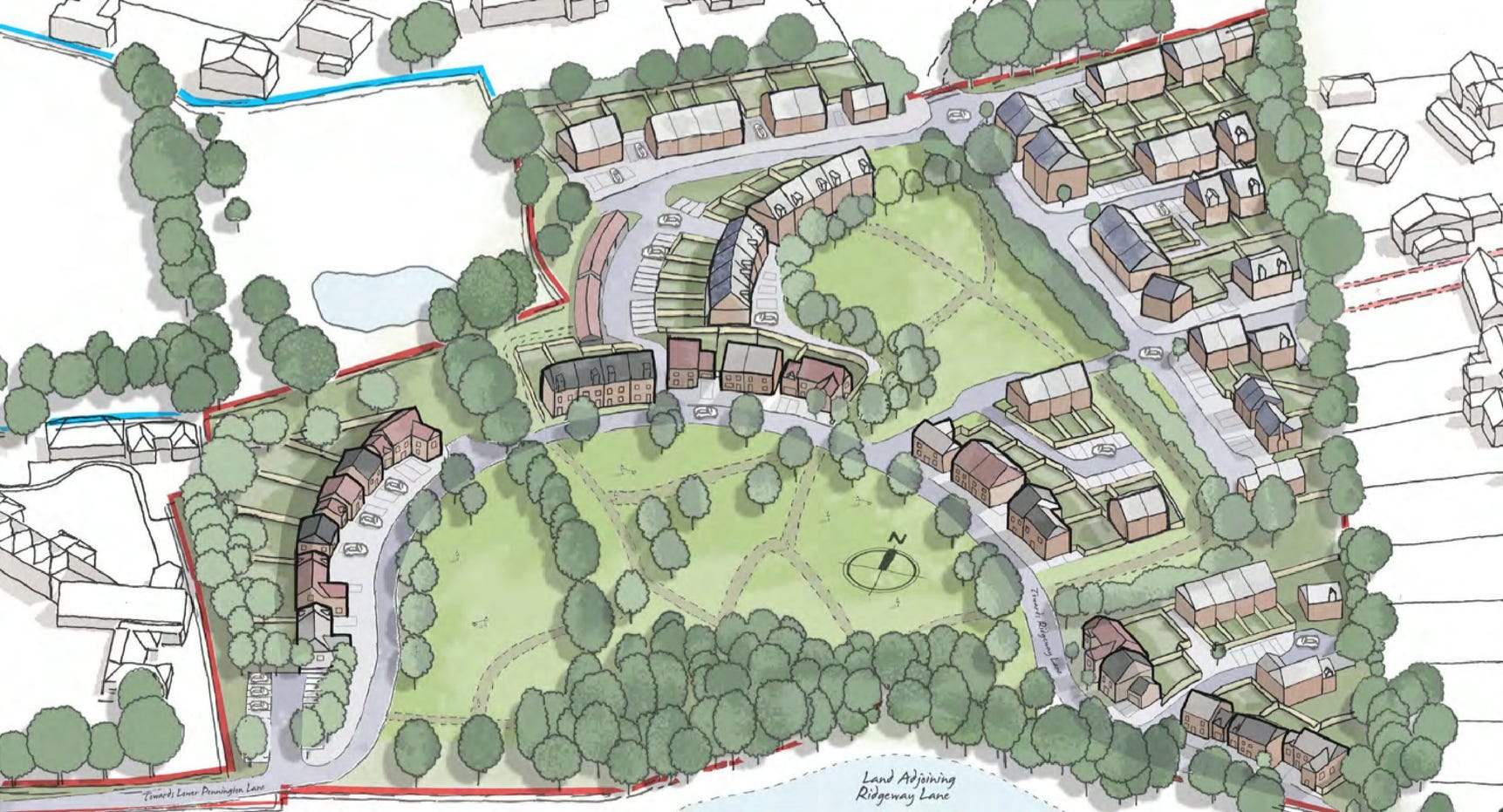
A hearing granted outline permission for up to 82 dwellings on the New Forest District part of the SS6 allocation, together with related access, drainage and open space works within the National Park. The Inspector found the scheme complied with the development plan, noting the site was allocated for at least 100 homes, NFDC had only a 1.53-year housing land supply, the proposal would deliver 50% affordable housing, and habitats effects could be addressed through the section 106 obligations and conditions. (6001075, 6001076)
Chesterfield: Holiday lodge scheme allowed on former landfill
Following a hearing, permission was granted for 15 holiday lodges, an ancillary building and a play area on part of a historic landfill site. The main issue was whether the site could be made reasonably safe and fit for the proposed use. The Inspector accepted the technical reports and that residual risks from ground gas and contamination could be controlled by conditions. The decision illustrates the level of technical certainty needed where development is proposed on contaminated or unstable land. (6006373)
West Suffolk: Rural worker dwelling refused where essential need and scale were not justified
A hearing involving a farm worker’s self-build dwelling was dismissed. The Inspector found operational advantages in living on site, but not an essential functional need for a full-time worker to live permanently there, particularly given the scale of the livestock enterprise, limited evidence, and insufficient forward budgets. The proposed 200 sqm dwelling was also found disproportionate to the enterprise’s needs and harmful to the countryside. (6006355)
Liverpool: Fifty-one homes dismissed over trees, woodland and open space
A 51-dwelling scheme was dismissed despite the significant benefit of market housing in a sustainable location. The Inspector found the site was not previously developed land, had meaningful informal recreational value, and contained protected trees and woodland that made an important contribution to the streetscene. The loss of trees, woodland, and open space outweighed the housing and economic benefits, in the context of an accepted 5.6-year housing land supply. (6004888)
Dacorum: Backland self-build homes failed under the tilted balance
Outline permission for two self-build dwellings in Bovingdon was dismissed despite a substantial housing land supply shortfall of about 1.2 years and a secured section 106 contribution. The Inspector gave significant weight to the housing and self-build benefits, but found the proposal would be an uncharacteristic and urbanising backland intrusion, with insufficient evidence that acceptable external amenity space could be provided. (6005945)
East Devon: Permission in Principle refused where habitats mitigation was not secured
Permission in Principle for up to nine dwellings in Newton Poppleford was dismissed. The Inspector found that the site lay within the zone of influence of the East Devon Pebblebed Heaths SPA/SAC and that, although the appellant was willing to provide mitigation at technical details consent stage, there was no mechanism before the appeal to secure it. Separate harm was also identified from countryside location, impact on the East Devon National Landscape and loss of Grade 1 agricultural land. (6004981)
Sefton: Children’s home dismissed on oversupply and need evidence
The change of use of a three-bedroom dwelling in Birkdale to a children’s home for one looked-after child was dismissed. The Inspector gave significant weight to Sefton’s recently adopted Children’s Residential Care and Children’s Supported Accommodation SPD, but emphasised that proximity alone did not demonstrate oversupply. The determinative point was the absence of appellant evidence to rebut the Council’s Children’s Services claims that existing local provision was sufficient and that no unmet need had been shown. (6007242)
Dorset: Solar panels refused where heritage harm outweighed energy benefits
Planning and listed building consent appeals for solar photovoltaic panels on rear roof slopes were dismissed. The Inspector accepted that improved energy efficiency and a lower carbon footprint were public benefits, but found the panels would be visually incongruous on the listed building, harm nearby listed buildings’ settings and fail to preserve or enhance the Bridport Conservation Area. The absence of sufficient structural and installation details also created uncertainty over impacts on historic fabric. (6007068)
Search the full text of all PINS appeal decisions for free at www.appealbase.com
PS. We are aware that the links above may not work in some email clients. If this is the case, please view the Digest in the Substack app or online, or just enter the appeal reference at www.appealbase.com to view the full decision.


